Blog
Decking in the far North
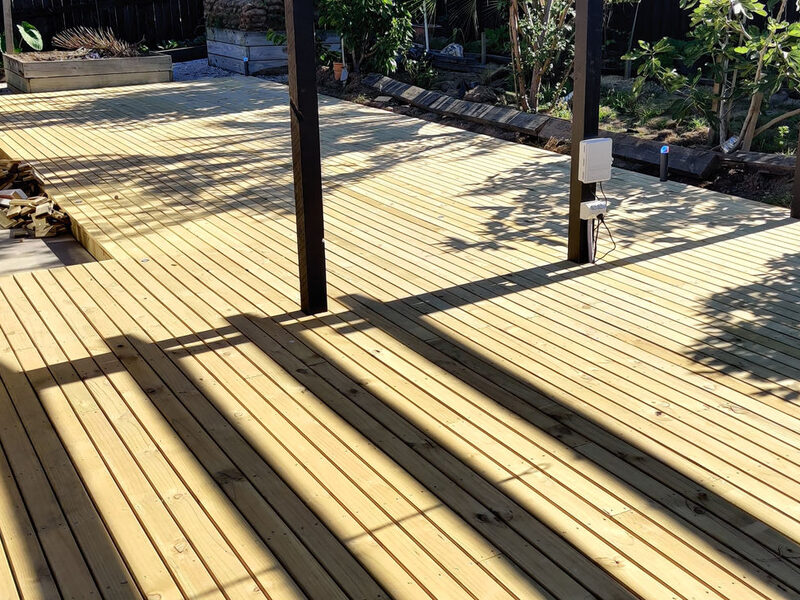
Which decking timber is best? Every material has its strengths and its drawbacks — it is a matter of picking the one that suits how you live and what you want to spend.
Pine (radiata)
- + Treated for durability.
- + Cost effective.
- + Widely available.
- + Easy to handle.
- + Good lifespan, 15 to 20 years.
- + Easy to maintain.
- + Smooth to walk or sit on.
- – Chemically treated, though arsenic free these days.
- – Shorter life than hardwood.
- – Needs maintenance every year.
Kwila, meranti and other hardwoods
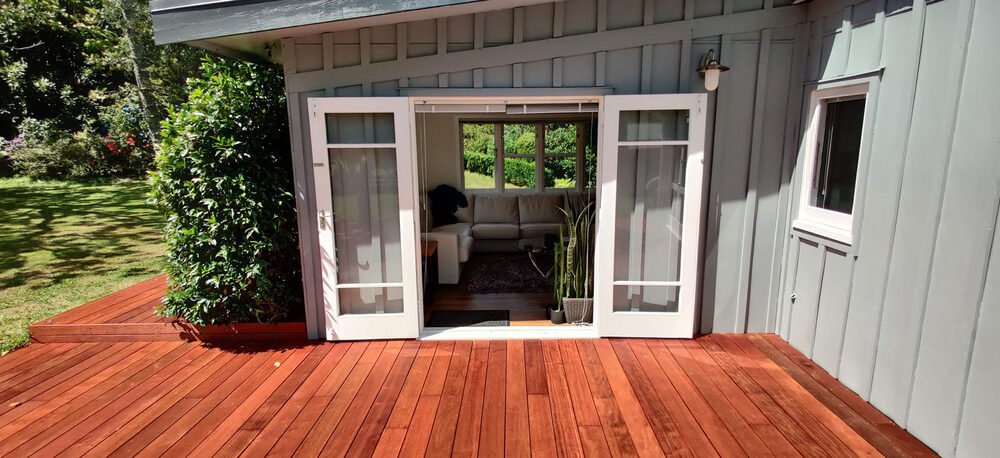
- + Untreated.
- + Very long life, 25 to 30 years.
- + Easy to maintain.
- + Smooth to walk or sit on.
- + Weathers to a silver grey if you leave it.
- + Comes in 90×19mm and 140×19mm.
- – Harder to get hold of.
- – Comes from tropical rainforest.
- – Twice the price of pine.
- – Bleeds tannins when new, which stains walls.
- – Needs the more expensive stainless fixings.
- – Joists at 450mm centres, so more of them.
Composite decking
- + A mix of wood fibre and plastic.
- + Almost no maintenance — no staining, oiling or painting.
- + A clean twice a year is all it asks.
- + Good quality board will not crack, splinter or split.
- + The longest life of the three; it will outlast a timber deck.
- + Looks high end.
- + Made from recycled milk bottles and wood waste.
- – Lacks the look and feel of real timber.
- – Expensive.
- – Gets hot in direct sun; dark colours can be too hot to walk on.
- – Cheaper board can crack or stain.
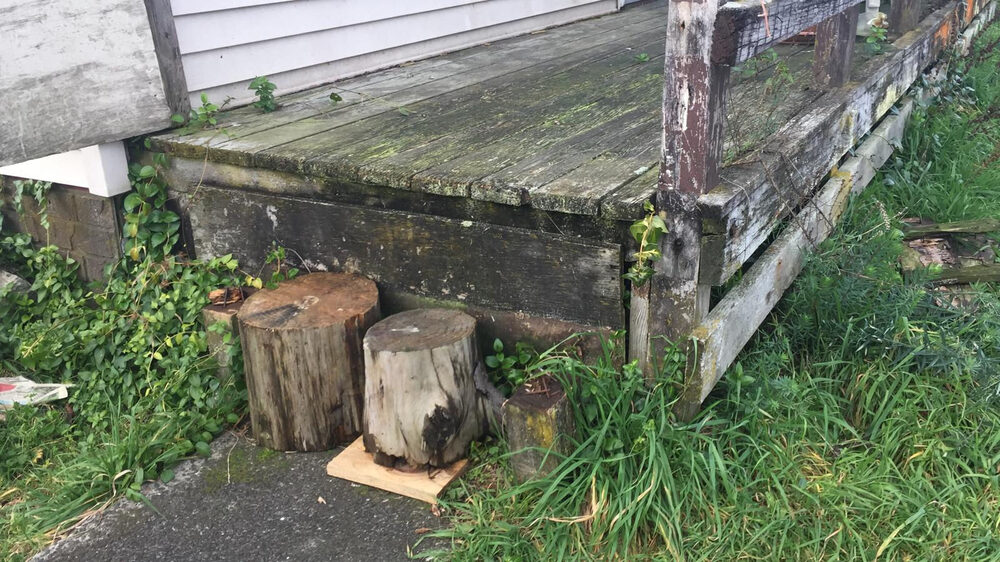
Can we just replace the boards and keep the frame?
Usually not. By the time the boards have had it, the substructure underneath is generally the same age and the same condition — so any repair is a short-term fix.